
1. The Biology of Starter Ratios & Inoculation
When baking artisanal sourdough, managing fermentation is not about following a rigid timer — it is about controlling the microbial balance between wild yeasts (which produce carbon dioxide gas for rise) and lactic acid bacteria (which produce organic acids for flavor and gluten breakdown).
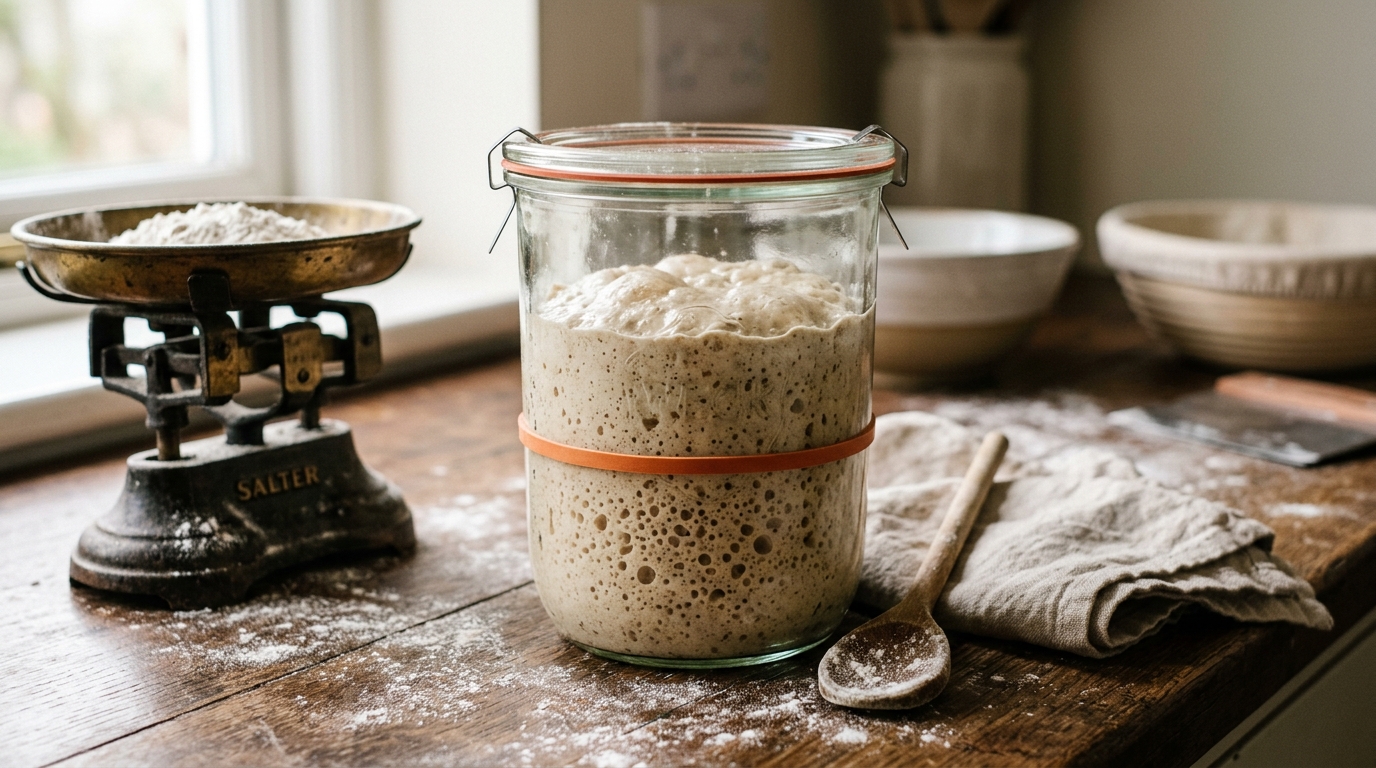
The simplest and most powerful tool you have to control this timeline is the feeding ratio: the proportion of mature starter to fresh flour and water. A higher ratio introduces more fresh carbohydrates, diluting acidity and giving wild yeasts a longer runway to feed and multiply before reaching peak activity.
2. 1:1:1 vs 1:2:2 vs 1:5:5 Comparison
Understanding which ratio to use depends on your baking schedule and the room temperature in your kitchen:
- 1:1:1 Ratio (Fast Bake Day Peak): Equal parts starter, flour, and water (e.g., 50g starter + 50g flour + 50g water). Peaks in 4 to 6 hours at 24°C (75°F). Perfect when you want to start mixing dough the same afternoon.
- 1:2:2 Ratio (Balanced Daily Maintenance): 20g starter + 40g flour + 40g water. Peaks in 6 to 8 hours. Offers a mild acid balance and consistent vigor.
- 1:5:5 Ratio (Overnight Feeding & High Temperatures): 20g starter + 100g flour + 100g water. Peaks in 8 to 12 hours. This provides an extended feeding window so your starter does not collapse while you sleep.
3. How Ambient Temperature Dictates Peak Timing
Microbes multiply exponentially faster in warmth. At 28°C (82°F), a 1:1:1 feeding might peak in just 3 hours, turning overly sour and gluten-destructive. Conversely, in a chilly kitchen at 18°C (64°F), that same 1:1:1 feed might require 8 hours.
Always adjust your ratio to match room conditions: increase to 1:4:4 or 1:5:5 in hot summer months, and stick to 1:1:1 or 1:2:2 using warm water (28°C / 82°F) in winter.
4. Choosing the Best Feeding Flour
Wild yeast feeds best on complex nutrients found in unbleached whole grain flours:
- Whole Rye Flour: High in amylase enzymes and pentosans; accelerates fermentation and builds exceptional yeast vitality.
- Stoneground Whole Wheat: Rich in minerals and ash content; creates a resilient, robust culture.
- Unbleached Bread Flour: Clean gluten structure with predictable rising height; great for 50/50 blending with whole rye.
5. Visual and Physical Signals of Peak Rise
Never mix dough based on time alone. Look for these three physical cues:
- The starter has doubled or tripled in volume with a slightly domed top surface.
- A dense network of aeration bubbles is visible along the glass jar sides.
- A pleasantly sweet, fruity, yogurt-like aroma rather than harsh acetone or nail polish remover.
Never Guess Your Fermentation Timing Again
Master feeding ratios, doubling schedules, and your first open-crumb loaf with our complete Starter-to-Loaf system: Master Guide, Maintenance Manual, and printable tracking journals.
Get Starter to Loaf Master Pack ($17) →Frequently Asked Questions
What is a 1:1:1 sourdough starter feeding ratio?
A 1:1:1 ratio means equal parts by weight of mature starter, flour, and water (e.g., 50g starter, 50g flour, 50g water). It peaks quickly, usually in 4 to 6 hours at room temperature.
When should I use a 1:5:5 ratio instead?
A 1:5:5 ratio (e.g., 20g starter, 100g flour, 100g water) slows down fermentation, allowing your starter to peak in 8 to 12 hours. This is ideal for overnight feeding or high ambient room temperatures.
Does the water temperature matter when feeding?
Yes. Lukewarm water (26°C–28°C / 78°F–82°F) speeds up microbial activity in cold kitchens, while cool tap water helps prevent premature peaking in warm weather.