
1. Why Dutch Ovens Are Essential for Artisan Loaves
Professional bakeries rely on commercial steam-injection deck ovens costing upwards of $10,000. In home kitchens, domestic ovens vent moisture continuously, drying out dough crusts within minutes.
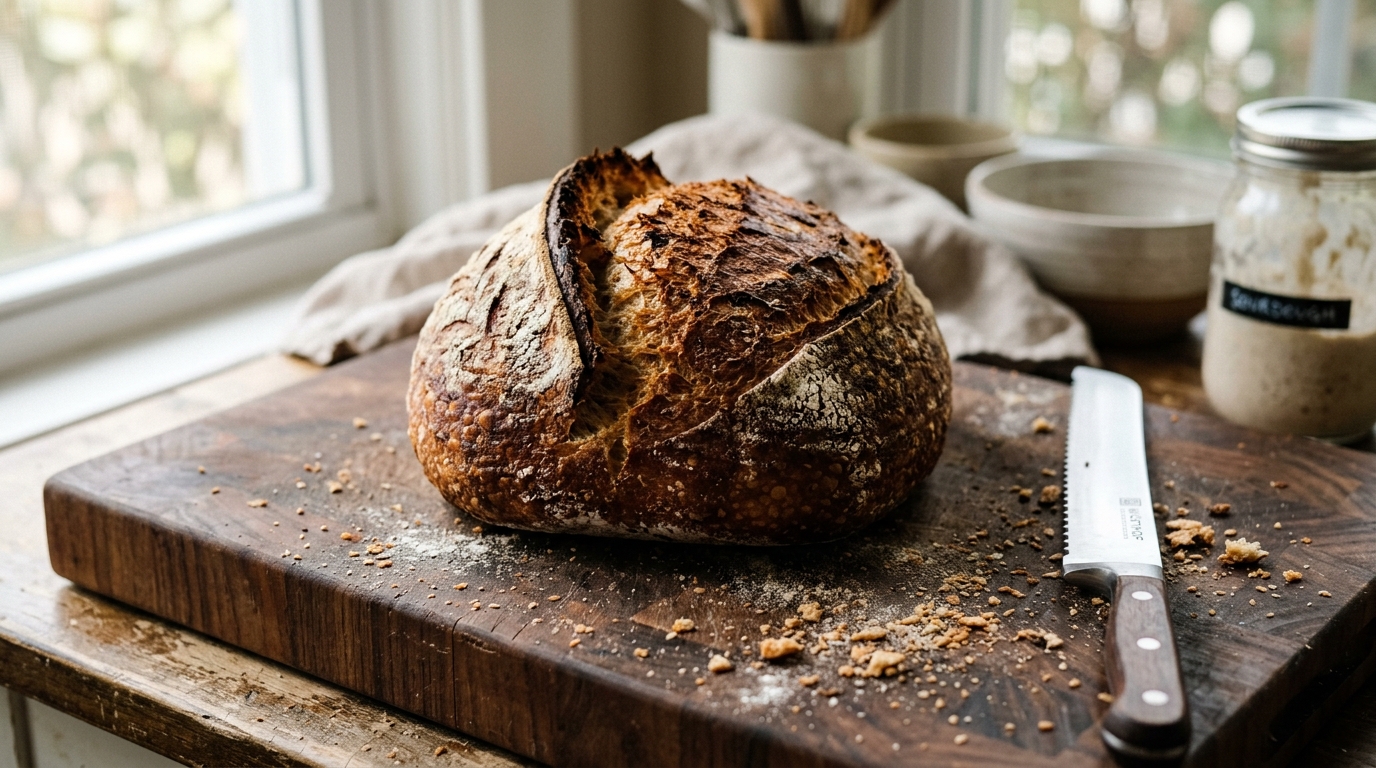
A heavy cast iron Dutch oven replicates commercial deck ovens by capturing the steam evaporating naturally from your dough. This creates a mini steam chamber that keeps the crust pliable, enabling maximum vertical oven spring and blistered caramelization.
2. Combo Cookers vs High-Sided Pots vs Bread Pans
Understanding vessel geometry is key to avoiding burnt forearms:
- Lodge Combo Cooker (Inverted Base): The shallow skillet serves as the base, while the deep pot acts as the lid. Loading and scoring cold dough onto the flat base is effortless and risk-free.
- Traditional High-Sided Dutch Oven: Excellent heat retention, but requires dropping dough into a 240°C deep pot, which can burn wrists or misshape the loaf.
- Challenger Bread Pan: Designed exclusively for artisan bakers. Accommodates both oval batards and round boules with thick cast iron handles on both base and lid.
3. Raw Cast Iron vs Enamelled Cast Iron
Raw Cast Iron: Virtually indestructible, handles extreme temperatures (over 260°C / 500°F), develops seasoning with use, and provides superior radiant heat. Best overall value for bread baking.
Enamelled Cast Iron: Beautiful aesthetically, easy to clean, but enamel coatings can craze or crack when repeatedly preheated dry at 250°C. Ensure lid knobs are rated for high oven temperatures.
4. The 5 Best Dutch Ovens Compared & Ranked
- 1. Lodge 3.2-Quart Cast Iron Combo Cooker (Best Value & Overall Pick): Inverted design makes loading safe and simple. Unbeatable performance under $50.
- 2. Challenger Bread Pan (Best Premium for Batards): Custom-built for sourdough bakers. Accommodates long batards and provides incredible thermal mass.
- 3. Le Creuset Signature Round Dutch Oven 5.5-Qt (Best Multi-Use): World-class heat distribution, but expensive and requires careful preheating to protect enamel.
- 4. Uno Casa Cast Iron Dutch Oven with Skillet Lid: Great dual-function alternative with silicone handle covers and dual-lid functionality.
- 5. Emile Henry Sublime Ceramic Bread Cloche: Lightweight glazed ceramic producing delicate, blistered thin crusts.
5. Sizing, Heat Limits, and Maintenance Tips
For standard 500g–800g sourdough loaves, a 4.5 to 5.5-quart (4.2L to 5.2L) vessel is the sweet spot. Anything smaller constricts oven spring; anything larger dissipates steam too widely.
Never quench hot cast iron in cold water, as thermal shock can warp or crack iron.
Master Baking Schedules with Our Quick Start Checklist
Download the step-by-step Sourdough Quick Start Checklist with Dutch oven preheating milestones, oven steam timelines, and temperature settings — 100% free.
Download Free Checklist ($0) →Frequently Asked Questions
Do I really need a Dutch oven to bake sourdough bread at home?
While you can bake with a baking stone and a tray of boiling water, a Dutch oven is by far the most consistent, foolproof method to trap steam and achieve bakery-quality blistered crusts at home.
Can preheating an empty Dutch oven damage the pot?
Raw cast iron (like Lodge) is completely unaffected by dry preheating. However, enamelled pots (like Le Creuset) can suffer microscopic enamel crazing over time if preheated empty at extreme temperatures.
How do I prevent the bottom crust from burning in a Dutch oven?
Place a heavy baking sheet or pizza stone on the oven rack directly beneath your Dutch oven to deflect direct burner heat, or place a trivet/silicone baking mat under your parchment paper.