
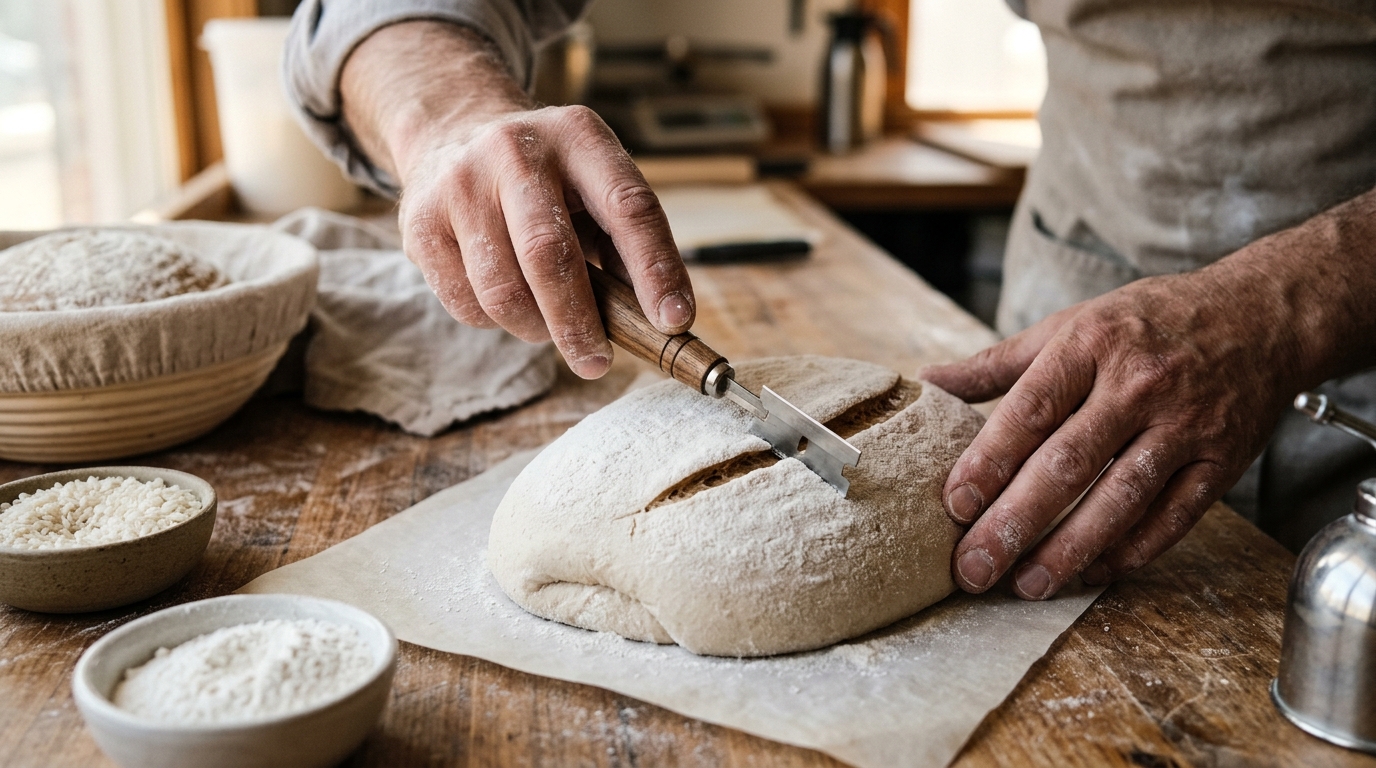
1. What Is a Banneton and Why Do You Need One?
A banneton (or proofing brotform) is a specialized basket used during the final proof of sourdough bread. Unlike non-porous glass or metal bowls, a traditional porous banneton wicks moisture away from the dough's outer surface as it rests.
This creates a thin, dry skin that holds its vertical shape when turned out, making scoring effortless and resulting in the signature spiral flour ridges seen on bakery loaves.
2. Natural Rattan Cane vs Wood Pulp Bannetons
The two main materials in artisan bread baking:
- Natural Indonesian Rattan Cane: Breathable, lightweight, durable, and leaves beautiful spiral flour rings on the crust. Available with or without linen liners.
- German Spruce Wood Pulp (Wood Fiber): Superior moisture absorption and thermal insulation. Keeps dough warmer in cool kitchens and provides virtually stick-free dough release.
3. Sizing Guide: Boule (Round) vs Batard (Oval)
Selecting the correct size prevents dough from overflowing or spreading flat:
- 8-inch (20cm) Round Boule: Ideal for 500g–750g loaves (fits standard 4.5–5.5 Qt round Dutch ovens).
- 9-inch (22cm) Round Boule: Best for 800g–1kg large family country loaves.
- 10-inch (25cm) Oval Batard: Best for 750g–900g sandwich-style oval loaves (fits Challenger pans and oval Dutch ovens).
4. How to Season and Prevent Dough from Sticking
A new banneton must be seasoned before its first bake:
- Lightly mist the interior of the cane basket with clean water using a spray bottle.
- Dust generously with a 50/50 blend of white rice flour and bread flour.
- Tap out excess flour and allow to dry thoroughly. The flour forms a non-stick patina trapped within the rattan grooves.
- Always use white rice flour for dusting before loading dough; rice flour has no gluten and will never fuse to wet dough.
5. Cleaning, Drying & Mold Prevention
Never wash a rattan banneton with soap and water! Excessive water can warp cane and cause green mold growth.
After tipping out your loaf, tap the basket against the counter to loosen flour. Use a dry, stiff bristle brush to clean between the ridges. Place the basket in the residual heat of a turned-off oven (40°C–50°C / 100°F–120°F) for 20 minutes to evaporate any moisture before storing in a dry cupboard.
Keep Proofing Times, Temperatures & Baskets Calibrated
Track banneton proofing times, ambient temperatures, and crumb outcomes with the complete Sourdough Fix-It Kit and printable batch journals.
Get The Sourdough Fix-It Kit ($7) →Frequently Asked Questions
Should I use the linen cloth liner or place dough directly in the cane basket?
Both work! Placing dough directly on the seasoned cane creates rustic spiral flour rings on the crust. Using the linen liner produces a smooth, velvety surface ideal for intricate botanical scoring.
Why did my sourdough stick to the banneton?
Sticking is caused by using standard all-purpose or bread flour instead of rice flour, or under-seasoning the basket. White rice flour is gluten-free and prevents sticking 100% of the time.
What do I do if my banneton develops mold?
Bake the empty basket in an oven preheated to 120°C (250°F) for 45 minutes to kill mold spores, then scrub thoroughly with a dry stiff brush and re-season.